Did you find this post useful? Please consider making a donation.
© D C Cello Studio 2012
If you purchased a student cello outfit you will already have a bag or even a hard case for your cello. Just like bows, the quality of bags and cases varies a great deal from one outfit to the next, and you may need to upgrade what you have. This is especially important if your cello is doing a lot of travelling with you to and from school or your workplace. A very basic cover with limited or no padding will do little to protect your instrument when it’s in the car, on the bus or train, or being carried around.
The more travelling you do, the greater your need to fully protect your cello with a hard case or very well padded soft case. There is a lot to choose from ranging in price from around £50 to thousands of pounds for professional level flight cases and covers. You’ll be pleased to know that £80 will buy you a very robust and well-made padded bag, which offers a good level of protection for everyday transportation of your instrument.
When choosing a suitable bag or case for your instrument it is also worth considering the weight. If you’re likely to do a lot of walking with your cello, you don’t want a case that will weigh you down and cause back or shoulder ache. 6kg may not sound like much, but add to that the 2.5 – 3 kg of your cello along with your music bag and you’ve got quite a load to carry – especially if your frame is relatively small. Here’s the catch though: entry level cello cases tend to be a lot heavier since they are made out of cheaper materials – usually fibre glass or moulded plastic. Lightweight cello cases are made out of high tech materials such as carbon fibre or carbon composite. These materials are much lighter and extremely tough and durable, but they come at a high price. Unless you have a valuable instrument and are likely to fly anywhere with it, you are unlikely to be looking at this calibre of cello case. You might think that buying a heavy case with wheels is a perfectly good solution, but your cello will not thank you for the bumps and jolts it will get on the majority of road and pavement surfaces, and you certainly won’t be using the wheels up and down stairs.
This is where semi-rigid cases (made out of high density foam or styrofoam) and thickly padded gig bags really come into their own. Styrofoam cases tend to be rather bulky and are often poorly made, but they are lightweight and offer suitable protection for everyday use. When considering padded bags, 11mm of padding should be the absolute minimum.
Here is a list of reliable bags and cases for a tighter budget:
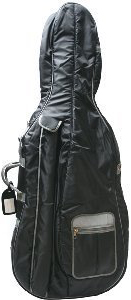 Make: Primavera Make: PrimaveraDescription: 11mm padded cello bag Price: £50 – £60 |
 Make: Tom and Will Make: Tom and WillDescription: 20mm padded cello bag Price: £60 – £70 |
 Make: Fusion Make: FusionDescription: 15mm high density foam padded cello bag Price: £75 – £90 |
 Make: Hidersine Deluxe Make: Hidersine DeluxeDescription: Deluxe 22mm padded heavy duty cello bag Price: £75 – £90 |
 Make: Turtle by Gewa Make: Turtle by GewaDescription: 25mm padded cello bag with wheels Price: £100 – £125 |
 Make: Excalibur Make: ExcaliburDescription: High density foam semi-rigid cello case Price: £110 – £130 |
If you’re planning to fly anywhere with your cello you’ll need to invest in a good quality case. The bad news here is that even the very best cases sometimes fail to fully protect instruments on airlines. There is always an element of risk when you fly with your cello, and you should always check your options with the airline or travel agent before you fly anywhere. The same applies to any other form of long distance travel that does not allow you to take your instrument on board with you.
The following is a list of more robust cello cases worth considering if you’re planning to do any long distance travel with your cello or you’ve invested in a good quality cello:
 Make: Archer by Gear4Music Make: Archer by Gear4MusicDescription: Durable fibreglass case weighing 7.6kg Price: £140 – £150 |
 Make: Hiscox (Lifelite Standard) Make: Hiscox (Lifelite Standard)Description: Double moulded construction weighing 5.2kg Price: £175 – £210 |
 Make: Sinfonica Make: SinfonicaDescription: Fibreglass case with interior instrument suspension weighing 4.9kg Price: £240 – £280 |
 Make: Bam Classic Make: Bam ClassicDescription: Extra-durable ABS layer with full foam-injected interior suspension weighing 5.4kg Price: £340 – £370 |
Did you find this post useful? Please consider making a donation.
© D C Cello Studio 2012
The very clever folks at WordPress.com have compiled this lovely report detailing The Cello Companion’s reader and blog statistic for 2011.
Thank you for reading, subscribing, sharing and making this blog a success. I hope 2012 is a fantastic year full of musical inspiration for all of you and I hope this blog continues to inform and entertain. I welcome ideas and suggestions for new posts, so if you have any please post them here!

Here’s an excerpt:
The concert hall at the Syndey Opera House holds 2,700 people. This blog was viewed about 29,000 times in 2011. If it were a concert at Sydney Opera House, it would take about 11 sold-out performances for that many people to see it.
Click here to see the complete report.
© D C Cello Studio 2012
The vast majority of cello beginners will buy an outfit (a cello, bow and case or bag). Bows that come with outfits vary in quality, but assuming you’ve bought something that isn’t of the bargain basement variety the bow will probably be reliable if not brilliant. If this is the case you won’t need to look for a bow for at least your first six months of lessons. Second-hand outfits don’t always come with a bow, or may come with something that is not worth trying to salvage. Bows that are badly treated simply don’t last well, especially when they are made of less durable and flexible wood.
If you need to purchase a bow, it is worth spending a little more on something that will last you beyond your first cello assuming it is a full size instrument and a fairly basic student model. The price of bows varies just as much as that of instruments. Professional bows by famous makers carry price tags into tens of thousands of pounds, but it goes without saying that these are not the variety you’ll be considering. £100 – £250 will buy you a well-made, reliable bow.
Within this price range, carbon fibre bows are worth considering. The first non-wood bows appeared on the market in the eighties in the form of fibreglass, epoxy composite and carbon fibre. They looked, sounded and felt inferior to wooden bows. It was not until around the mid-nineties that the technology behind carbon fibre bows improved enough for certain makers of these bows to start turning heads. Although there are still players and high-end retailers who dismiss carbon fibre bows out of hand, there is a growing consensus now that carbon fibre bows by reputable makers offer more for your money, particularly in the above-mentioned price range. Carbon fibre is also practically indestructible, warp resistant and as light and flexible as good quality pernambuco wood, which is now an endangered species.
If you’re brand new to playing, you won’t be in a position to assess bows yourself, and you should get your teacher to help you find something suitable. The following is a list of good quality bows ranging from £100 – £250.
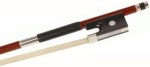 Maker: Dorfler
Type: Brazilwood cello bow, round stick
Price: £100 – £110
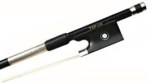 Maker: Westbury
Type: Carbon fibre cello bow (black), round stick
Price: £115 – £125
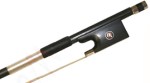 Maker: Long-Gen Chen (award-winning maker)
Type: Carbon fibre cello bow, round stick
Price: £110 – £140
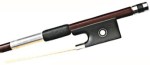 Maker: Concertante Plus
Type: Brazilwood bow, octagonal stick
Price: £130 – £145
Maker: Col Leg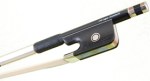 no Standard
Type: Carbon fibre bow, round stick
Price: £130 – £160
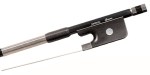 Maker: ‘Bravo’ by John Paul USA
Type: Carbon fibre cello bow, round stick
Price: £230 – £250
 Maker: Orchestra
Type: Pernambuco octagonal or round stick, silver mounted
Price: £230 – £250
Whether you upgrade your bow or stick with what you have, it needs to be properly cared for, especially if it is wooden. These are the most important aspects of bow care which will prolong the life of your bow and prevent costly repairs or replacements.
Did you find this post useful? Please consider making a donation.
© D C Cello Studio 2011
 The Cello Companion