Did you find this post useful? Please consider making a donation.
© D C Cello Studio 2012
The vast majority of cello beginners will buy an outfit (a cello, bow and case or bag). Bows that come with outfits vary in quality, but assuming you’ve bought something that isn’t of the bargain basement variety the bow will probably be reliable if not brilliant. If this is the case you won’t need to look for a bow for at least your first six months of lessons. Second-hand outfits don’t always come with a bow, or may come with something that is not worth trying to salvage. Bows that are badly treated simply don’t last well, especially when they are made of less durable and flexible wood.
If you need to purchase a bow, it is worth spending a little more on something that will last you beyond your first cello assuming it is a full size instrument and a fairly basic student model. The price of bows varies just as much as that of instruments. Professional bows by famous makers carry price tags into tens of thousands of pounds, but it goes without saying that these are not the variety you’ll be considering. £100 – £250 will buy you a well-made, reliable bow.
Within this price range, carbon fibre bows are worth considering. The first non-wood bows appeared on the market in the eighties in the form of fibreglass, epoxy composite and carbon fibre. They looked, sounded and felt inferior to wooden bows. It was not until around the mid-nineties that the technology behind carbon fibre bows improved enough for certain makers of these bows to start turning heads. Although there are still players and high-end retailers who dismiss carbon fibre bows out of hand, there is a growing consensus now that carbon fibre bows by reputable makers offer more for your money, particularly in the above-mentioned price range. Carbon fibre is also practically indestructible, warp resistant and as light and flexible as good quality pernambuco wood, which is now an endangered species.
If you’re brand new to playing, you won’t be in a position to assess bows yourself, and you should get your teacher to help you find something suitable. The following is a list of good quality bows ranging from £100 – £250.
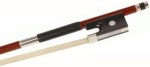 Maker: Dorfler
Type: Brazilwood cello bow, round stick
Price: £100 – £110
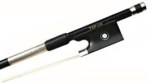 Maker: Westbury
Type: Carbon fibre cello bow (black), round stick
Price: £115 – £125
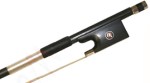 Maker: Long-Gen Chen (award-winning maker)
Type: Carbon fibre cello bow, round stick
Price: £110 – £140
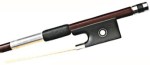 Maker: Concertante Plus
Type: Brazilwood bow, octagonal stick
Price: £130 – £145
Maker: Col Leg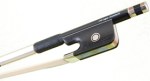 no Standard
Type: Carbon fibre bow, round stick
Price: £130 – £160
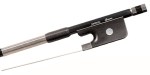 Maker: ‘Bravo’ by John Paul USA
Type: Carbon fibre cello bow, round stick
Price: £230 – £250
 Maker: Orchestra
Type: Pernambuco octagonal or round stick, silver mounted
Price: £230 – £250
Whether you upgrade your bow or stick with what you have, it needs to be properly cared for, especially if it is wooden. These are the most important aspects of bow care which will prolong the life of your bow and prevent costly repairs or replacements.
Did you find this post useful? Please consider making a donation.
© D C Cello Studio 2011
I was browsing a forum for classical music students the other day. My eye was caught by a thread entitled something like this: “What is the shortest time you can take to get to grade 8?” At first I was annoyed at the silliness of such a question. I was about to write an admonishing response, telling him how ridiculous he was to be so obsessed with racing toward a relatively meaningless qualification when he should be focusing on how to become the best he could at expressing himself on his instrument. But then I thought about myself at that age – around fifteen.
In my mid-teens I was fiercely ambitious and deeply dissatisfied at not yet having passed my grade 8 cello exam with distinction. I had only been playing the cello for around five years, but had already managed to perform Bruch’s Kol Nidrei (rather messily) at the local Youth Concerto Festival, and was regularly taking repertoire far beyond my ability to my lessons and nagging my teacher to let me play it: the Saint-Saëns Concerto No. 1; the Lalo Concerto; both Haydn Concertos and more. I wore him down and he let me take on the Saint-Saëns. I can honestly say I put a brand new spin on it, and not in a good way! I used eye-wateringly bad fingering patterns throughout – especially in the double-stop passage. My tempi were all over the place and bore no resemblance whatsoever to the score directions; dictated instead by my technical inadequacies, which were numerous and getting worse rather than better with my hours of hacking away at music beyond my reach rather than working on my weaknesses.
I eventually abandoned the Saint-Saëns Concerto: by the time I got to the third movement even I had to admit defeat. I never touched that concerto again except in a few sessions in my practice room many years later, when I would set down a pile of my favourite pieces next to my chair and systematically read through bits and pieces of them. But I certainly didn’t stop taking on repertoire that required much better chops than I had in those days. I wasn’t alone either. There were several cellists in my age group at the music school I attended, and the competition between us was stiff to say the least. We all played in the regional and national youth orchestras together, and the annual seating auditions were a tense, unpleasant affair. This was typical behaviour for young people of our age, and perhaps it was a valuable introduction to the fiercely competitive and political nature of the world we were planning to enter. Part of the problem was that our teachers were no better, and in hindsight seemed a little too focused on who had the most advanced students; whose students had played the most challenging repertoire and whose students had the most achievements behind them. Amongst those achievements of course, should be the coveted certificate proclaiming Grade 8 Passed with Distinction. This meant that we were never discouraged from our competitive behaviour – far from it in fact.
I played my Grade 8 exam at seventeen and by some unfathomable miracle, managed to scrape a distinction for it. I played the Allemande from Bach’s Third Suite in C; the second movement from the Lalo Cello Concerto and an arranged piece by Hindemith called Meditation. Each of those pieces was a struggle to perform with the accurate performance of certain sections always a matter of hoping for the best but expecting the worst. I remember coming out of the exam room in a state, having barely managed to avoid crying during the exam itself. I was convinced that I would achieve a low pass at best, and during the agonising wait for my results began to have rather sensible thoughts about slowing down and paying more attention to my desperately unreliable technique. Then the certificate arrived in the post and lo and behold: it was a distinction! All thoughts about sensible and necessary technical practice went straight out of the window and once again as my ego expanded beyond its previous inflated size I began to think of myself as a performer of great and terrifying repertoire.
When I arrived at music college around six months later I felt ready to conquer the classical music world. I was going to enter and win all of the major music competitions, play in all of the concerto festivals and make my way abroad on some fabulous music scholarship. I hadn’t bargained for the fact that my teacher – one of the most sought after in the country – had attracted a frightening number of cellists from all over the country, many of whom had been given a far more disciplined grounding than I. I was now a very insignificant fish in a much bigger sea. Furthermore, she did not suffer fools gladly and was certainly not going to indulge over-inflated egos in need of a reality check.
I recall my first lesson with her as if it was yesterday. I needed to prepare a piece to play for her, and I decided to play it safe with something I had learned three years previously and played many times since: Vocalise by Rachmaninov. I gave my customary emotionally over-the-top performance with much face-pulling and moving about. Instead of the flattery I had come to expect at the end of it, she gave me the brutally honest and detailed feedback I was to become accustomed to from her. Although I failed to see it at the time, it was in fact very encouraging, and essentially told me that I had raw talent and musicality in abundance, but that my technique was really in need of an overhaul. I was a little put out – if she thought my technique seemed insufficient on a piece like the Vocalise, what would she have said about my rendition of the Lalo Concerto? I was going to become more than a little put out as a battle of wills ensued. Of course many of you already know this part of the story as I touched on it in my previous post about efficient practising. At the risk of boring you with tails of my youthful foolishness, I shall continue this story as it relates directly to the point I wish to make in this post.
It went like this: I – still flush with the success of my distinction and a few other orchestral and performance achievements that year – was in no mood to be told that I needed to go back to basics in order to develop better and more reliable habits. My teacher, by no means confronted with the first upstart of her career, put her foot down firmly and used my attempts at proving her wrong to prove me wrong instead. I would bring something like Beethoven No.3, Op.69 to the lesson, and crash spectacularly within the first twenty-four bars. I would then mutter about how much better it was working in my practice room and have another few unsuccessful goes at it. Then she would calmly and patiently explain why things weren’t working. She would turn the focus of the lesson to working on whichever aspects of technique had shown up as weak. Then she would provide me with relevant studies or exercises which would inevitably end up at the bottom of a neglected pile of books in my practice room. It was about six months into my first year at music college when she handed me a study I had played sometime in my early teens. It was a very sensible approach to working on my spiccato bowing without having to focus too much on tricky notes, keys or upper register playing. Unfortunately I didn’t see it that way at the time, instead taking it as a personal insult. Surely such elementary studies were far beneath me?! I didn’t do much to conceal my indignation, and my teacher quite understandably began to lose patience with me. How she had managed to be quite so patient up until that point is anybody’s guess.
At the same time I was starting to experience prolonged bouts of muscle soreness, tennis elbow and tendinitis. I was also beginning to realise that I really wasn’t all that. I was on the back desk of the college orchestra cello section, I was not getting invited to play in chamber groups and I knew that I was surrounded by musicians – not just my fellow cellists – who were a great deal more accomplished than I was. A slow and painful process eventually lead to me overcoming my RSI issues and changing my mindset so that I began to listen to and apply what my wise teacher told me. More than a decade later I am still enjoying the benefits of her wisdom, and I hope that my students are too.
The moral of this story is, quite simply, don’t be hasty. Aiming to pass Grade 8 is a fine goal and a satisfying one to work towards. But it isn’t the be-all and end-all of musical achievements. It doesn’t imply that you have reached cellistic genius. It is no guarantee that you have truly mastered the technique required to play the pieces you chose. If you’re a teacher, exciting as it is to see your students reach Grade 8 level, you will do them far more good in the long-term if their focus is more on becoming a musician than passing exams. All it really means is that you’re no longer a beginner.
Did you find this post useful? Please consider making a donation.
© D C Cello Studio 2011
In the same way that a vigorous exercise session needs to be followed with cooling down and stretching, the same goes for a practice session – especially a demanding one. Cooling down and stretching are just as important as warming up for injury prevention. Where the function of warming up is to prepare the body and mind for a strenuous practice session, Cooling down should gradually step down practice activity, returning your body to a pre-practice state. A gentle stretching routine after cooling down will also help your muscles to recover after intense activity, but over-stretching can have the opposite effect.
There are many different ways to slowly reduce your level of activity as you wind down your practice session. I have always found the following suggestions to be very satisfactory:
At the end of your cool down session, which should take around ten minutes, stand up and stretch your arms above your head as you would just after waking up. Stretching is a fairly instinctive activity: you’ll know which muscles feel most in need of it. Generally the wrists, forearms, shoulders and neck benefit from gentle stretching movements. But as already mentioned, gentle is the keyword here. If you notice tension building in any of your muscles during your practice session, standing up to stretch and breathe deeply and slowly for a few minutes is a very good idea. While it is perfectly normal to experience tension or even aches and pains while working on demanding repertoire or new techniques, it should not be perceived as part of the technique but rather as a message from your body asking you to find a more efficient way of performing the task. Beware of entering into a “no-pain-no-gain” approach. You’ve heard me say it before and you’ll no doubt hear me say it again!
Did you find this post useful? Please consider making a donation.
© D C Cello Studio 2011
 The Cello Companion