Some Thoughts on Intonation

“Intonation is a question of conscience.” – Pablo Casals

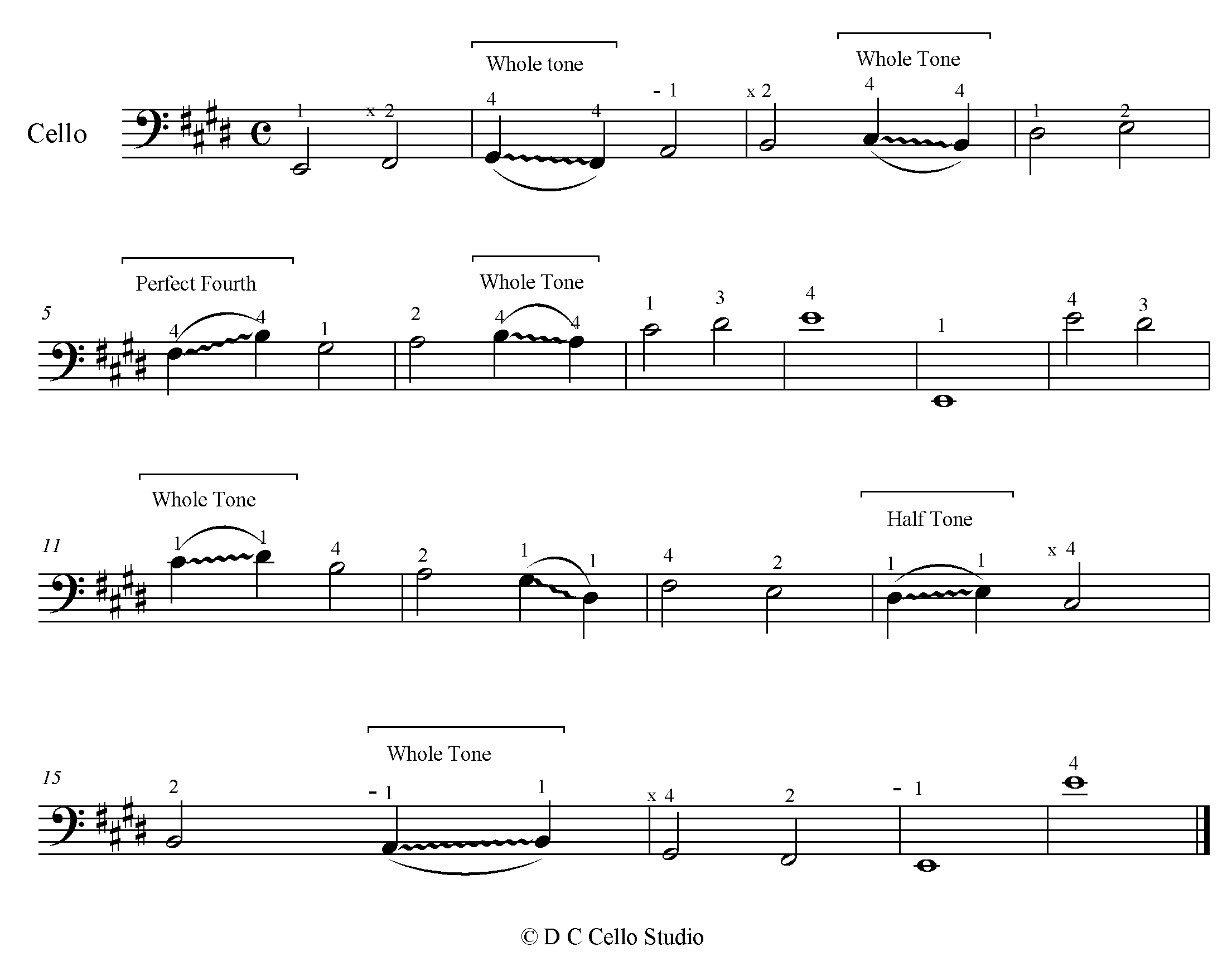
So true on so many levels! A burning issue for all us bowed string players and the bane of many of our lives, intonation tends to remain a work in progress for many years. When examined up close this topic becomes less of a discussion and more of a doctoral thesis. And like so many aspects of cello technique, you’ll encounter significant differences of  opinion amongst players and teachers on how to tackle intonation problems.

I suppose this comes as no surprise – when I try to analyse precisely how I play in tune (I should point out that even after twenty-four years of playing this doesn’t always happen), I’m frankly stumped. There are obvious elements essential to good intonation such as accurate finger placement, an excellent grasp of the geography of your cello and well developed relative pitch (assuming you don’t have the rare gift of perfect pitch). But there is definitely more to it than that. Casals called it a question of conscience. Bunting suggests (quite refreshingly) that perfectionist attitudes to intonation annihilate freedom of movement in the fingers essential to so much more than just intonation. Both philosophies point to something other than a technical or mechanical  process. There is a strong  psychological aspect which I believe is all too often forgotten or discarded.

We all have specific feelings about intonation. For many of us those feelings may include fear, frustration and often denial – leading to a high tolerance for inaccurate tuning. Perhaps the ideal relationship with intonation is to view it as part of the artistic palette. Emphasising certain intervals (such as marginally sharper major thirds and sevenths in major keys, or flatter thirds in minor keys) can colour and define keys quite beautifully. To reach this ideal I believe one has to allow for a margin of error, which gradually diminishes as the physical memory becomes more accurate and the ear more exacting. This allowance should not be confused with the previously mentioned tolerance for poor intonation, which I have seen developed to an alarming degree in some cellists despite most of them having a “good ear”.  For a long time I was one of those intonation “deniers”, often thinking my performances had gone rather well only to listen back to those which had been recorded and cringe in horror at the glaring intonation errors.

Based on my own playing experience and that of my students, I believe there are three main negative emotions associated with poor intonation: fear, uncertainty and low self confidence. The first two are relatively easy to combat (although they take time to get rid of); the latter is trickier and varies a great deal from one individual to the next.

So, fear and uncertainty first! High register playing and large interval jumps are prime candidates for inspiring apprehension, which lead to physical tension, and we all know what impact that has on intonation. Take your pick of the major cello concertos for passages in the instrument’s upper range. How often do we hear (or give) performances of these works that are let down by those upper register passages when the sound is thin and some or all of the notes are off-pitch? Even after hours of repeating those passages ad nauseam in the practice room, they often let us down in performance. All too often the practice we do to eliminate the fear factor only perpetuates it. The root of the problem is not in the passage, but in the irrational fear of that portion of the fingerboard. So it stands to reason that getting familiar with that highest octave-and-a-half through slow, relaxed work on scales, arpeggios and studies is a much better use of our practice time than repeatedly trying to play a phrase or passage in an area of our instrument that frightens us because we don’t know it well enough. No matter how hard we try to make it sound beautiful, our attempts are undermined by inaccurate finger placement and incorrect bow placement. With enough repetition of the same high register passage, we might eventually become more familiar with that area of the cello. Equally we are in danger of constantly reinforcing incorrect finger placement and excess tension because our focus is more on trying to play the passage the way we think it should sound and not nearly enough on the mechanics behind the music.

There is certainly no shortage of technical material for the cello that covers the entire range of the instrument or concentrates on perfecting the upper register – Feuillard’s Daily Exercises for Cello, Yampolsky’s Violoncello Technique and the Galamian Scale System for Cello to name a few. Until we can comfortably play such technical material covering every inch of the fingerboard, it is unreasonable to expect ourselves to be able to play repertoire with these technical demands. However you choose to approach familiarising yourself with the full range of your cello, familiarise yourself you must and you really are better off using a method designed specifically for this purpose. When Elgar was composing his sublimely beautiful cello concerto I seriously doubt he ever stopped and thought: “Ah, this will do wonders for the bow technique!” He composed the work with those whose technique was already fit for purpose in mind. But I’m digressing somewhat. The point I’m trying to make is that through consistent, concentrated practising of scales and arpeggios of every shape and size we give ourselves a much better chance of making that magical and essential connection between internal pitch and physical memory – the marriage between the sensitive fingertips and attentive ears.

Low self confidence, as I’ve already pointed out, is a more elusive problem which can have its roots in such a vast range of places that it is not really possible to tackle with a single suggestion. I do believe however, that investing enough of one’s time in the aforementioned study of the fingerboard will at least serve to relieve some of the symptoms of the problem. I also know from my own experience and from watching my students develop, that intonation is often bad because we expect it to be. That expectation is built up over years: the majority of us start out with poor intonation, not because we can’t hear it but because we don’t know where or how to place out fingers. For some cellists the development of a dependable left hand technique happens in a nice upward trend and their fear of intonation disappears as their command of the instrument improves. But for many more – perhaps most – it is more of a jagged affair with frustrating flat lines and almost as many downward as upward spikes. Surely this trains us to feel negative about aspects of our playing and gives us reason to believe that we are more likely to be wrong than right in the placement of a finger or a shift to a new position.

Again, I refer you back to the good old-fashioned daily dose of scales and arpeggios. Add a metronome to that, and remember: it is impossible to practise too slowly whereas practising too fast is not only possible, it’s disastrous.

Did you find this post useful? Please consider making a donation.

© D C Cello Studio 2011


Effective Practising: Making the Most of Your Time

Whether you’re studying music and devoting many hours to practising and playing, or a keen amateur with a full time day job, a family and very limited time to practise, it really is essential that you use your available time as productively as possible.

Making the Most of Your Time

I remember my music college days, when many of the first year students (myself included) suffered from a terrible condition: eight-hours-a-day syndrome. When we weren’t in classes, we could all be found in our practice rooms furiously hammering the most challenging studies, sonatas and concertos in our repertoire, desperately trying to outplay each other. Every now and then one of us would stumble out of a practice room looking like a rabbit caught in the headlights, and outside you would always come across a couple of us nervously chain-smoking and discussing the terrifying notion of our lessons – only two or three days away. Very few of us were spending quality time locked behind those sound-proofed double-doors. We were far more focused on “doing time”, and being able to proudly boast about the seven or eight hours we’d spent turning ourselves into nervous wrecks.

Not long after I started at music college, my teacher made what I thought was a radical and utterly ridiculous statement: that it was not possible to put in more than four genuine hours of practice a day. The rest, she said, was just playing. That can’t be right, I thought: everyone here seems to practice for at least six hours a day. And they all seem to be practising – going through their Kreutzer and Popper studies in minute detail, repeating the same two bars for anything up to an hour at a time. Surely that was practising? It must be, because the students who took that approach were very good, and very intimidating. If it worked for them, I was determined it was going to work for me too! By the last quarter of my first year I was rewarded for my manic practice routine – not with the effortless, impressive technique I had expected it  would produce, but with persistent and painful tendinitis. Being inclined towards and surrounded by melodramatic attitudes, I took myself off to doctors, physiotherapists, homeopaths and counselling. Cortisone injections, therapeutic massage, herbal remedies, sage advice: some brought temporary relief, some nearly convinced me that the problem had disappeared and some made not the slightest difference. For the next year I was plagued with injury, finding myself unable to play for weeks and sometimes months at a time. It wasn’t until I started thinking back to my teacher’s wise words about practice and considering what she really meant that I started to overcome my tendinitis. It wasn’t simply a matter of cutting back on the number of hours I spent in my practice room. I began to realise that I needed to get a lot more forensic about what was wrong with my technique, and stop bucking against my teacher’s insistence that certain fundamental techniques such as my bow hold, my posture and how I held my instrument needed serious attention.

At the other end of the spectrum are those aspiring cellists whose time is taken up with a challenging career (not connected to playing the cello) and often also a busy family and social life. It’s hard enough finding an hour in the week to squeeze in a cello lesson, so where on earth is that hour a day for cello practice going to come from? Many of my students face this problem and it is often a source of frustration for them. They sheepishly tell me how little practice they’ve managed this week as they unpack and tune up their cellos. While all of these students have very different lives: different careers, different working hours, different family commitments; they all tend to have one thing in common: they admit to sitting vacantly in front of the telly most evenings when they know they could be using some of that time to practise. I understand why they don’t: I’ve had my own brief experience with the nine-to-five corporate lifestyle, and I remember how  exhausted I felt at the end of my working day. I spent many of my evenings half-asleep or snoring in front of the TV, and at times my cello was like a distant memory. I realised that getting into a regular practice routine required me to set aside time for my cello that was sacred. No matter how tired I thought I was, no matter how much I thought I wanted to watch a certain program, however pressing my need to take myself off to my local for a pint seemed, for that time my cello needed to be the undisputed priority. It was difficult at first – like trying to get back into an exercise routine after a holiday of relaxation and culinary indulgence. But after a couple of weeks I found myself looking forward to my sessions, even when I felt bone-weary to start with. I was feeling a positive difference in my playing and I felt energised by the time I had tuned my cello and begun warming up. It didn’t work absolutely every night, and I also learnt to tell the difference between feeling superficially tired and being so exhausted that it was better to call it quits.

Changing my understanding of what practising means saved me from giving up on playing the cello on more than one occasion. The psychological and emotional aspects of this transformation, as fascinating as I find them, are a topic for an entirely new article. For now let’s focus on what makes a practice session truly productive. I’ve already discussed the importance of warming up, and in that article I touched on the benefit of using warm-up exercises that serve to improve fundamental techniques such as sound, bow control and vibrato as well as getting us physically prepared for a practice session. Once your warm-up is complete, these are useful points to consider in terms of how to structure the rest of your session:

  • In the pieces you’re playing, what are the main technical challenges? Don’t just think about the bars that tend to trip you up and settle for playing them over and over again. While repetition certainly can be a valuable learning tool, it only works when you know what you’re repeating and why. Analyse what happens in those troublesome bars: are there unexpected string crosses? Is there a position change you’re struggling with? Perhaps there are complex events for both the bow and the left hand and you’re struggling to co-ordinate them. Whatever your conclusions, find some exercises and studies that focus on these technical challenges.
  • If you play in an orchestra or chamber group, what aspects of your playing do you think holds you back the most in this activity? Perhaps you’d like to improve your vibrato, or you freeze every time you see a trill above a note. Whatever the technical shortcoming, there’s an exercise for it. Make a list of the things you’d like to improve and ask your teacher to help you find suitable exercises and studies. Remember that in order to give your body the chance to learn the necessary movements that each technique involves, you need to work SLOWLY at first.
  • If you’re planning to spend your session working on one of your pieces, think back to the last time you played it. Were you able to play the whole piece at the recommended tempo or did you find yourself slowing down in the sections you find more challenging? If you’re slowing down in parts, you need to bring the overall tempo down relative to those sections. You’ll also do well to spend more time working on the tricky sections and less time playing through the bits you’re more confident with. As obvious as this sounds, it’s a common issue and worth mentioning. When I get my students to think back on what they spent most of their practice hours on, they often realise that it was the sections they felt more confident with rather than those that they knew were giving them trouble. This is not to say that no time should be dedicated to playing pieces you know you can play well – it’s a good boost to your confidence and generally good for the soul. But pay attention to just how much time you spend doing this and try to balance your sessions with good developmental work.
  • Don’t forget to cool down and stretch at the end of your session.

I’ll be writing more about this soon.

Did you find this post useful? Please consider making a donation.

© D C Cello Studio 2011

Mastering Simultaneous Shifting and String-Crossing on the Cello

String crossing and shifting are two fundamental techniques that present stumbling points on their own. Put them together and they can become an unfortunate blemish in an otherwise good performance. Without the necessary co-ordination between the left and right sides which are performing different physical tasks and a thorough understanding of the positions visited, this particular technique will lack good tone and accuracy of rhythm and intonation. Amazingly, it is all too often skimmed over by teachers who assume that if their students are reasonably capable of each individual technique they will easily be able to combine them. Just because I can easily pat my head and rub my belly doesn’t necessarily mean I can perform both actions simultaneously!

The first step towards mastering any technique is to understand why it exists and what it will enable you to do. The simultaneous string-cross and shift presents itself in two particular situations. The first of these and typically the first time we encounter the technique in our study of the cello is when we play in more remote keys which eliminate the use of some or all of the open strings. The second is when we need to avoid open strings in order to play sustained passages with consistent tone and vibrato or to avoid awkward string crossing in faster passages. One of the great advantages of being able to manage this technique well is the significant increase in potential fingering patterns that become available, which means that we have a much better and more varied sound palette at our disposal.

Most of us first encounter the need to shift and cross in scales: most notably, E Major. However students who play with orchestras frequently come across techniques they have not yet covered in their lessons and this is often one of them. To me it has always made sense to introduce the technique earlier on – while the neck positions are being studied – using home key scales such as F and D majors (two octaves) thus giving the student and early introduction to alternate fingering patterns and making remote keys far less daunting to play and sight-read. All it takes to comfortably manage a piece, study or exercise in a key with four or more sharps or flats is a sensible fingering pattern and the instinct to determine where extended positions are required – a simple matter of knowing where you are in the given scale.

I believe the reason it is easier to learn scales such as D or F majors with fingering patterns that avoid open strings is simply that they are already familiar territory. Furthermore, there are open string targets available to test intonation along the way. Any student who has been introduced to the first four positions on the cello should be comfortable with major keys containing up to three sharps and two flats, and minor keys with two flats and one sharp. They will also have covered extended positions; and string-crossing* is one of the first techniques we are introduced to on the cello. By combining these techniques we can introduce the valuable technique of simultaneous shifting and string crossing to avoid open strings.

Below are two versions of the scale of F major (two octaves); the first with conventional fingering and the second with a fingering pattern that avoids open strings and happens to be identical to the conventional fingering of E major (two octaves), thus making F major an ideal means of preparing for E major.

In the second fingering pattern, each string cross coincides with a position change. Most students find this confusing at first because with the exception of the shift from first to fourth position on the D string, backward shifts lead to a higher pitch in the ascending scale and visa-versa in the descending scale. So to grow accustomed to this counter-intuitive event, the following exercise can be practised until the left hand knows precisely how to move from one group of notes to the next.

Once you’ve mastered this exercise, you should be able to play the new F major fingering pattern fluently with no obvious gaps at the string crosses. Don’t rush: if you can’t play it slowly, there’s no reason why you’d be able to play it three or four times faster! Learning new shifts and fingering patterns, along with hearing the pitch you’re aiming for before playing it takes time and careful, well-planned practice.

The next step is to apply the F major exercise to the scale of E major as follows.

*The fact that it remains one of the most important and subtly difficult techniques to master is another article entirely!

© D C Cello Studio

Order or download my latest electronica-cello feast, Cellotronics

Essay on the Craft of ‘Cello-Playing by Christopher Bunting: A Short Review

An essential read for any serious cellist or cello teacher. Christopher Bunting (1924 – 2005) was a world-renowned cellist and pedagogue whose methods and compositions have become an integral part of the cello-verse. He singled himself out as a teacher with his deeply intellectual and holistic approach to the learning process, stressing the importance of the psychological influence over the physical act of playing in each individual.

Essay on the Craft of ‘Cello-Playing goes into great detail on the psychology of playing, offering a great deal of food for thought and encouraging each cellist to closely examine his or her emotional and intellectual workings in order to assess why they encounter certain (well-known) physical hurdles on the instrument, and work out how to overcome them. Bunting clearly didn’t believe in short-cuts, and his playing was certainly a testament to this fact. Described by the Daily Telegraph as “a Master” and Die Welt as having “highly developed musical comprehension, prodigious technique and outstanding artistry”, we are left in no doubt as to what incredibly good hands we’re in from the first word to the last.

Christopher Bunting was by many accounts an intense and inspiring teachr with a fertile musical imagination and a dry sense of humour, all of which is evident and comes across rather beautifully in his writing. Expect silly puns at unexpected moments along with fabulous analogies and comparisons that put difficult concepts into sharp perspective.

Essay on the Craft of ‘Cello-Playing is more than a treatise on playing the cello, and also contains imaginative and hugely helpful exercises (many of which feature in the much more condensed Portfolio of Cello Exercises) with detailed explanations on what each is for, and how best to approach it.

Not an easy read, being fairly dense and packed with a remarkable amount of information and thought, but I can’t recommend it enough. Persevere if you find it heavy-going at first!

© D C Cello Studio