Stretch Position on the Cello

The technique of stretching is one of the great challenges faced by progressing beginner cellists, and must be approached with care and precision. In spite of this it is often neglected or glossed over as a technique, and becomes a real sticking point in left hand technique. When stretch position is not properly studied or understood it causes intonation issues, tension in the left hand and forearm, and is always noticeable to the listener as a technical flaw.

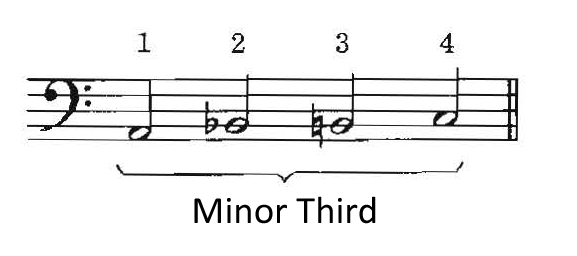
To understand how the stretch works, let’s examine the familiar closed position. Your fingers are placed an equal distance apart and the interval between each is a semitone. The interval from first to fourth finger (on the same string) is therefore a minor third.

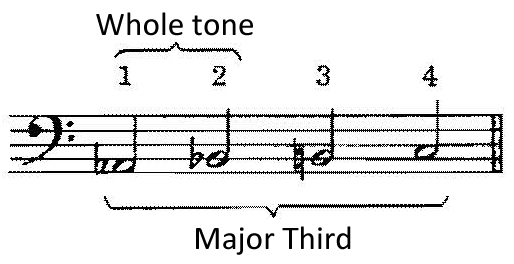
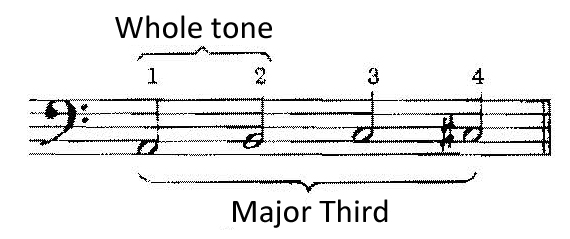
In the closed position we do not have access to the semitones between the open string and first finger; or the fourth finger and the next open string. We reach these by extending backwards or forwards. When in stretch position we also extend the interval between the first and fourth fingers to a major third without having to shift the entire hand forwards or backwards.

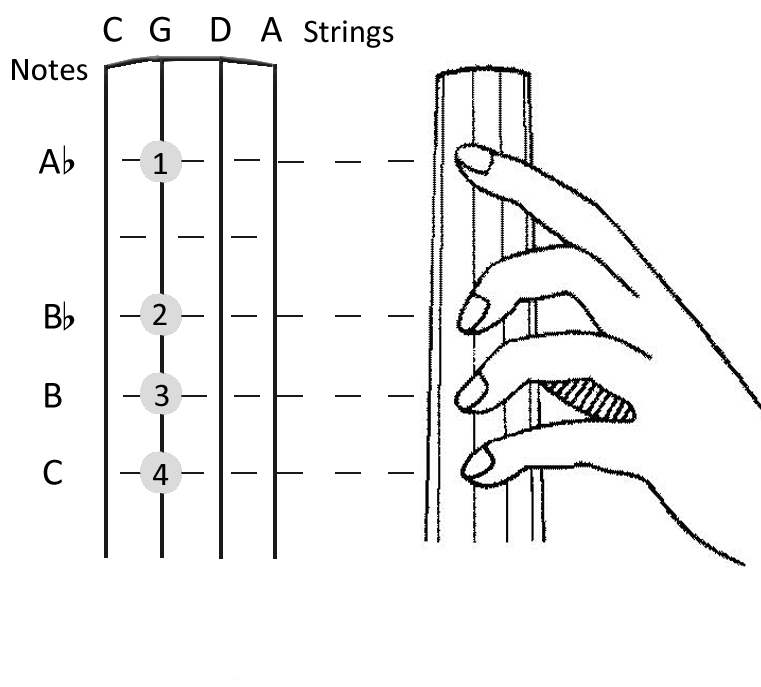
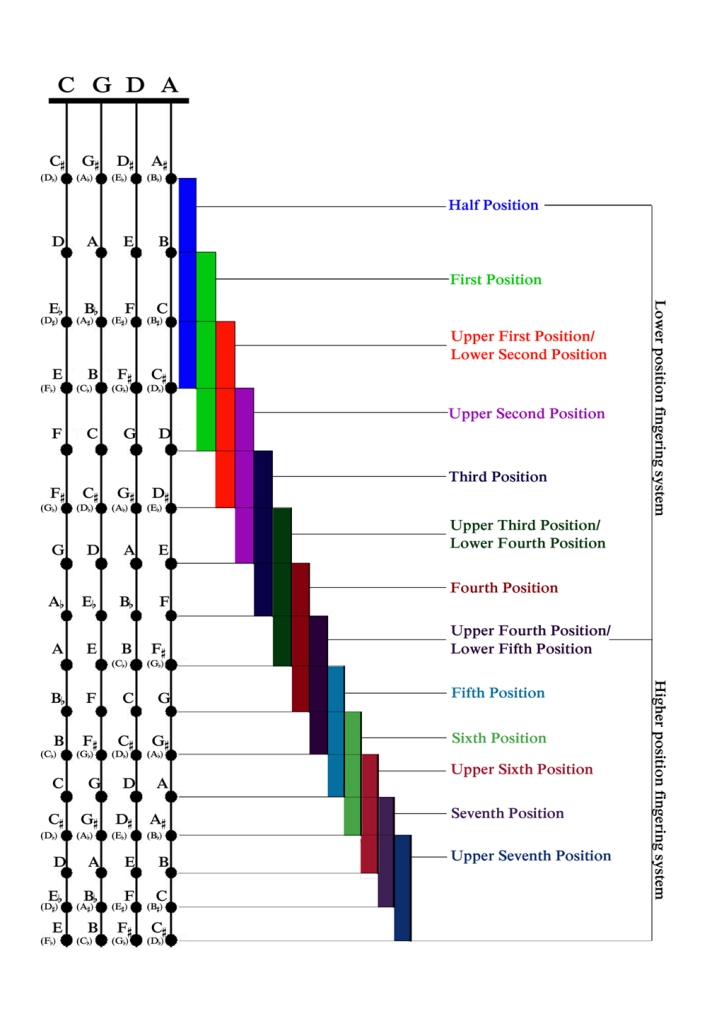
As shown in the image below, a backward stretch means that the first finger extends towards the topnut by a semitone while the second, third and fourth fingers remain in place. This means that there is a whole tone between the first and second fingers and semitones between second, third and fourth fingers.
In a forward stretch position, the only finger to remain in place from the original closed position is the first. The second finger extends forwards towards the bridge by a semitone, pushing the second third and fourth fingers forward by a semitone each.
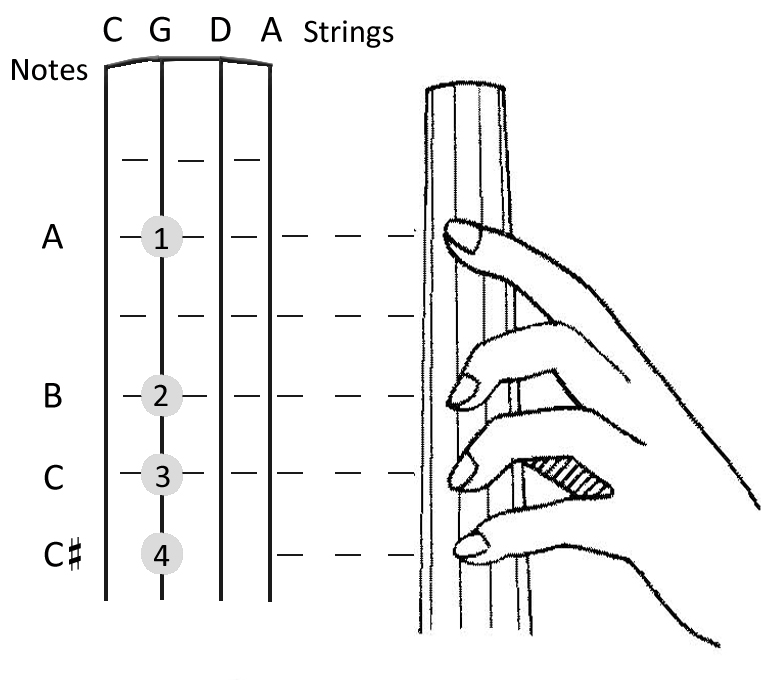
So the only difference between the backward and forward stretch positions is the notes under the hand. The physical position for the fingers and hand is identical. A common mistake among cello students is to extend the fourth finger away from the third to achieve the forward stretch. This should be avoided at all costs – especially for those with smaller hands. The hand simply isn’t built to accommodate a whole tone stretch between the third and fourth fingers for any length of time, especially when playing across two strings or playing in keys that require frequent and prolonged stretches.

It takes time and regular practice to become comfortable with stretch position, but there are a few tips that will greatly facilitate the learning process:

  1. Allowing the first (and largest) knuckle of the index finger to collapse will facilitate the stretch between the first and second fingers.
  2. Allow the thumb to move slightly down the neck (in the opposite direction to the first finger) or let it leave the neck altogether.
  3. Avoid pressure from the thumb at all costs. Smaller hands may find it necessary to release the thumb from the neck altogether – if this facilitates the stretch better, always remember to bring the thumb back to the neck when returning to closed position. To maintain overall stability it is best to have the thumb making gentle contact with the neck at all times.
  4. Allow the elbow to move slightly down and forwards, and keep the shoulder completely relaxed and mobile.
  5. Remember that the stretch is always between the first and second fingers.
  6. Familiarise yourself with and ideally memorise the notes belonging to forward and backward stretches on each string
  7. It is best not to attempt stretching in other positions until you have mastered it in first.

Did you find this post useful? Please consider making a donation.

© D C Cello Studio 2012
Effective Practising: Warming Up

Practice makes perfect? Well, that really depends on the quality of the practice sessions. We all know that without practice there is no progress – playing a musical instrument is a never-ending learning curve. But we also know how hugely frustrating it is when we’re putting in hours of hard work and feeling a distinct lack of progress, or perhaps even a sense of one step forward three steps back. If this is the case, the first thing you need to examine very closely is how you practise. It’s a sad fact that many teachers offer outstanding advice and wisdom in lessons but forget to teach their students how to practise. For some students there is little need to focus on the art of practising, but for most of us it is not a natural skill. And the more time we spend doing something incorrectly, the harder it becomes to undo the damage.

So what makes a good practice session? Quite simply, it is time spent reinforcing and ideally improving on a technique, a section of a study or even half a bar of a piece. How is this achieved? That really depends on you as an individual and how you learn best. But fortunately there a few constant rules that apply to everyone regardless of skill level or personality type.

Warming Up

You wouldn’t start any kind of physical exercise or sports session without warming up, so why should your cello practice session be any different? Just because you’re spending the session sitting down doesn’t mean you wont be engaging in intense physical activity. Those new to cello playing may not be doing anything acrobatic on the instrument just yet, but they will be using muscle groups in ways that they are not accustomed to. More advanced players find themselves performing complex physical tasks which depend on the muscles being warm. You’re just as likely to injure yourself by launching into complicated, blindingly fast scale and arpeggio exercises as you engaging in any intense physical activity such as running or dancing without warming your muscles up first.

Warming up can be done just as effectively away from your instrument as it can doing dedicated warm-up exercises on the cello. During the cold winter months warming your hands before getting down to any serious playing is essential and can be achieved by doing gentle finger exercises in a basin of warm water or whilst wearing thermal gloves. The following exercises are great for getting the blood flowing to the fingertips:

  • Alternate between making a fist (not too tight) and stretching the fingers out
  • Flicking each finger against the thumb
  • Gently squeezing juggling balls or anything of similar size and malleability
  • Hold a squash ball in the palm of your hand and gently push each finger against the ball

Balancing and breathing exercises are an excellent way to get your body in the ideal state for playing. As cellists we easily forget the importance of regular deep breathing when we play and all too often unwittingly hold our breath when we’re wrestling with difficult passages or new techniques. Soon the shoulders become tight and hunched, and nothing good can come of that. Breathing exercises for singers are perfect and easily found all over the Net. Combining slow controlled breathing with simple balancing exercises is a great way to focus on posture and finding our centre of gravity, without which all playing is severely limited. When I say simple, I mean simple. Don’t feel that you need to consult advanced pilates, yoga or martial art manuals. Standing on one leg for a few seconds, then switching legs and repeating the exercise attempting to increase the time spent balancing on each leg. Having a mirror in front of you will help you to ensure that you are standing tall, keeping your shoulders relaxed and square, and your head on top of your spine (as opposed to inclined or slightly in front of your spine). You can also step things up a little by gently swinging your arms to and fro, ensuring that they move freely with no restriction in any of the joints.

Warms-ups on the cello should engage both left and right hand, but not necessarily at the same time. It is perfectly acceptable to begin with bow warm-ups on open strings, or bow exercises without the cello itself (a fine example of this is on the very first page of Christopher Bunting’s Portfolio of Cello Exercises Book 1). Using a metronome to time bow strokes and maintain discipline is something I can’t recommend enough. Not only is it an important means of keeping your exercises precise, it also helps to develop a keen sense of timing and speed in your bow technique, which will make all the difference in your search for a beautiful and artistic sound. Again, I refer you to the first page of Bunting’s Portfolio Book 1: the bowing regime. I’ve had a job and a half convincing my students to make this dry, seemingly dull approach to bowing part of their daily warm-ups. But those who have succumbed to my endless nagging have come back beaming, especially once they have been doing it for weeks or more and begun to feel and hear the difference it makes to their playing. It makes sense to find warm-up exercises that serve more purpose than simply waking up the muscles and getting the blood flowing to the extremities. I guarantee that the bowing regime does just that, and I strongly recommend reading Bunting’s Essay on the Craft of ‘Cello-Playing for a detailed description on approaching the exercises. Of course the left hand needs warming up just as much as the bow arm does, and should also be given a gentle wake up rather than overly demanding exercises. I find the trilling exercises (number 1) in Feuillard’s Daily Exercises for Cello to do the job very nicely. For the purpose of warming up I ignore the fast variations and stick to the quaver exercises, which I do on all strings and in all of the neck positions. Again, the metronome is crucial as a means of keeping the finger work steady and balanced, preventing any urge to speed up. I find it equally beneficial replacing trills with slow timed vibrato on each finger, each string, and in each position – either working through the neck positions or through the mid-positions (5th to 7th).

Not only should your warm-up session perform the obvious task of warming the muscles and getting you physically prepared for a good practice session, it should relax you physically and mentally, helping you to focus your mind on what you wish to accomplish in the following 40 – 60 minutes. The amount of time you spend warming up depends on how long you plan to practise for, and how demanding your practice material is. I recommend a minimum of ten minutes for your first hour long session of the day; and at least five minutes for each subsequent session.

© D C Cello Studio

A Beginner’s Guide to Keys in Music

Firstly, let’s define three important terms which are easy to get confused and therefore important to be distinguished from each other before exploring how they are related.

1) Key: a family of notes which belong together and have a distinctive sound or “colour”. A key can be major or minor and is represented by a key signature (see definition 2). Every key has 7 individual notes which are represented in the scale (see definition 3) of the key.
2) Key signature: a representation of the accidentals found in a key. These are shown at the start of each stave just after the clef and just before the time signature* and greatly reduce the number of accidentals that have to be shown in the main body of the score**. The order of accidentals in a key signature does not always follow the order in which they appear in the scale. Instead, they follow the order in which they appear from one scale to the next.
3) Scale: a representation of the notes belonging to a key in ascending and descending order starting and ending on the root note of the key. There are 3 main types of scales: major (which represent major keys), harmonic minor and melodic minor (which represent minor keys). Each type follows a specific order of intervals***

* Times signatures, unlike clefs and key signatures, are only shown at the start of the first stave and do not appear again unless there is a change of time signature in the music

** Score: a written or notated representation of music

*** Interval: the pitch distance between 2 consecutive notes (e.g. C – D = a whole tone or major second; C – D-flat = a half tone or minor second)

Understanding major and minor keys and their relationships

The reason there are related major and minor keys is because they share the same key signature. Major keys are easier to understand because they do not deviate from their key signature, and have only 1 scale to represent them. Major scales are based on the following sequence of intervals:

Whole tone; whole tone; half tone; whole tone; whole tone; whole tone; half tone.

So let’s see how that relates to the actual notes of C major:

C – D: whole tone

D – E: whole tone

E – F: half tone

F – G: whole tone

G – A: whole tone

A – B: whole tone

B – C: half tone

Now let’s look at F major:

F – G: whole tone

G – A: whole tone

A – B-flat: half tone

B-flat – C: whole tone

C – D: whole tone

D – E: whole tone

E – F: half tone

So no matter what the key, major scales follow an identical sequence of intervals. This is why they all have different key signatures. In order to follow the same sequence, they have to follow a unique pattern of notes.

Minor keys are more complex than major scales. Every minor key has 2 different types of minor scale as previously mentioned: a harmonic minor scale and a melodic minor scale. Each type of scale deviates from the key signature in a slightly different way.

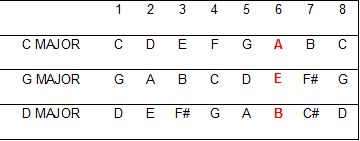
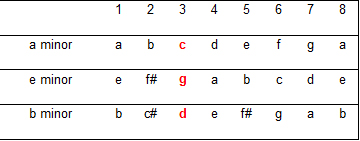
But let’s forget that confusing fact for a moment and look at how major scales and minor scales relate to each other.  Every key signature relates to both a major key and a minor key. The table below shows 3 ascending major scales. The numbers above the scales relate to the steps of the scales.  The red note in bold print in each scale is the root note of the relative minor.

You’ll notice that it is always the 6th step of the major scale that is the root note of the relative minor key. This is the easiest way to find out which minor key shares the key signature of a major key.

In contemporary rock and pop music, we often come across “natural minor” scales (also known as the aeolian mode). These are minor scales that do not deviate from the key signature and take on the following sequence of intervals:

Whole tone; half tone; whole tone; whole tone; half tone; whole tone; whole tone.

This is a (natural) minor, which is related to C major (as you can see in the table above)

A – B: whole tone

B – C: half tone

C – D: whole tone

D – E: whole tone

E – F: half tone

F – G: whole tone

G – A: whole tone

The next table shows the three natural minor scales related to the major scales above. This time, you’ll notice that the bold print red note, which is the root note of the relative major key, has changed to the third step.

In classical music, minor scales are altered in 2 different ways. This gives minor keys a more distinct and defined sound, and distinguishes them from major keys. The first alteration is the harmonic minor scale, in which the 7th step is always raised up by a half tone as shown in a harmonic minor below:

A – B: whole tone

B – C: half tone

C – D: whole tone

D – E: whole tone

E – F: half tone

F – G#: augmented second

G# – A: half tone

The augmented second is the largest interval you’ll find in any classical scale, and is only found in the harmonic minor. Play and listen to the scale several times to hear its distinct sound.  The table below shows 3 examples of harmonic minor scales. The altered 7th steps are in bold italic.

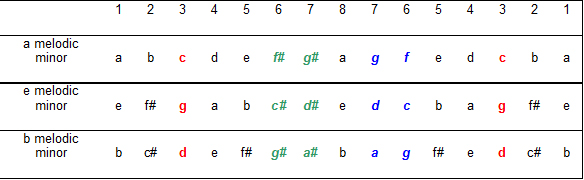
Now for the melodic minor scale, which I like to call the chameleon scale because it changes its colours on the way down.  Melodic minor scales raise the 6th and 7th steps by a half tone in the ascending half and lower them back down by a half step in the descending half. This means that the scale has a different sequence of intervals in its ascending and descending halves as shown in a melodic minor:

Ascending

A – B: whole tone

B – C: half tone

C – D: whole tone

D – E: whole tone

E – F#: whole tone

F# – G#: whole tone

G# – A: half tone

Descending

A – G: whole tone

G – F: whole tone

F – E: half tone

E – D: whole tone

D – C: whole tone

C – B: half tone

B – A: whole tone

Note also that the descending melodic minor scale is a natural minor which follows the key signature.  Play and listen to the scale, and be sure to hear the difference between the melodic minor and the harmonic minor. The table below shows 3 examples of melodic minor scales. The relative majors are once again marked in bold red; the altered notes in the ascending scale are shown in bold italic green, and the lowered notes in the descending scale are shown in bold italic blue:

The altered notes in harmonic and melodic minor scales are always shown as accidentals within the score, and not in the key signature.

So how do we know whether a piece of music is in a minor key or a major key? First look at the key signature and make sure that you know which major and minor key it belongs to. Then look at about the first 8 bars of the music. If you see any accidentals within the score (not, the key signature – you’ve already looked at that) check what they are. If they happen to be the 6th and/ or 7th step of the minor key, then you can be certain that the music is in a minor key and not a major key.  If you see no accidentals within the score, or accidentals that are not the 6th or 7th steps of the minor key, you can be certain of it being a major key.

© D C Cello Studio

Order or download my latest electronica-cello feast, Cellotronics

© D C Cello Studio