Bows for beginner cellists

The vast majority of cello beginners will buy an outfit (a cello, bow and case or bag). Bows that come with outfits vary in quality, but assuming you’ve bought something that isn’t of the bargain basement variety the bow will probably be reliable if not brilliant. If this is the case you won’t need to look for a bow for at least your first six months of lessons. Second-hand outfits don’t always come with a bow, or may come with something that is not worth trying to salvage. Bows that are badly treated simply don’t last well, especially when they are made of less durable and flexible wood.

If you need to purchase a bow, it is worth spending a little more on something that will last you beyond your first cello assuming it is a full size instrument and a fairly basic student model. The price of bows varies just as much as that of instruments. Professional bows by famous makers carry price tags into tens of thousands of pounds, but it goes without saying that these are not the variety you’ll be considering. £100 – £250 will buy you a well-made, reliable bow.

Within this price range, carbon fibre bows are worth considering. The first non-wood bows appeared on the market in the eighties in the form of fibreglass, epoxy composite and carbon fibre. They looked, sounded and felt inferior to wooden bows. It was not until around the mid-nineties that the technology behind carbon fibre bows improved enough for certain makers of these bows to start turning heads. Although there are still players and high-end retailers who dismiss carbon fibre bows out of hand, there is a growing consensus now that carbon fibre bows by reputable makers offer more for your money, particularly in the above-mentioned price range. Carbon fibre is also practically indestructible, warp resistant and as light and flexible as good quality pernambuco wood, which is now an endangered species.

If you’re brand new to playing, you won’t be in a position to assess bows yourself, and you should get your teacher to help you find something suitable. The following is a list of good quality bows ranging from £100 – £250.
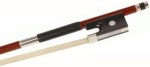

Maker: Dorfler

Type: Brazilwood cello bow, round stick

Price: £100 – £110
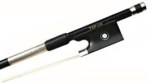
Maker: Westbury

Type: Carbon fibre cello bow (black), round stick

Price: £115 – £125
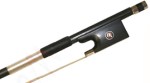
Maker: Long-Gen Chen (award-winning maker)

Type: Carbon fibre cello bow, round stick

Price: £110 – £140
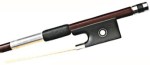
Maker: Concertante Plus

Type: Brazilwood bow, octagonal stick

Price: £130 – £145


Maker: Col Legno Standard
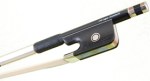
Type: Carbon fibre bow, round stick

Price: £130 – £160
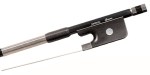
 

 Maker: ‘Bravo’ by John Paul USA

Type: Carbon fibre cello bow, round stick

Price: £230 – £250

Maker: Orchestra

Type: Pernambuco octagonal or round stick, silver mounted

Price: £230 – £250

Whether you upgrade your bow or stick with what you have, it needs to be properly cared for, especially if it is wooden. These are the most important aspects of bow care which will prolong the life of your bow and prevent costly repairs or replacements.

  • Never over-tighten your bow. If the stick loses its camber (curve) and looks straight you will need to loosen the hairs so that there is still enough tension in the hair, but the stick retains its camber.
  • Always slacken your bow off when you have finished playing. Leaving the bow at playing tension will warp the stick (particularly wooden bows) and will reduce the elasticity of the hair (especially if it is natural horse hair, which all but the very cheapest bows have).
  • Never leave your bow lying around. If you’re taking a break from practising, rest it on the rib of your cello or hang it on your cello stand assuming it has a bow attachment. Never leave it lying on your chair or on the ground – it’s very easy to forget about and accidentally stand or sit on!
  • If you have a soft cello bag, always take your bow out first and pack it away last. Unpacking your cello while the bow is still in the bag puts the bow at risk of snapping. The same applies when putting the cello back in its bag if the bow is already in its pouch.
  • Never deliberately touch the bow hair. For many players it is inevitable that their fingers will touch the hair while playing. After a while the hair closest to the frog becomes slippery and discoloured, and doesn’t hold any rosin. This can’t be avoided, but touching the bow hair while unpacking or picking up the bow can and should. No matter how clean your hands are, there is oil on your skin that will create oily spots on the bow hair and literally causes holes in the sound as the bow is drawn across the string.
  • When you finish playing and slacken the bow off, tap the tip of the bow (VERY gently) against your hand over a bin to get rid of excess or caked rosin. This will prevent a build-up of dried rosin in the hair and on the stick.
  • You will notice that the hairs break occasionally – while you’re playing or when they get caught on something like your music stand. This is normal, and only cause for concern if the bow is losing a lot of hair on a regular basis, which can happen when the hair is of inferior quality and/ or has not been properly fitted. In this case, see below. If the odd hair snaps, always use a small pair of scissors to cut the hair off at the frog and tip. Never pull it out as this can also lead to excess bow hair loss.
  • Eventually your bow will need to be re-haired and cleaned. Both of these tasks are jobs for a professional luthier or bow maker. Your teacher will be able to direct you to a reputable person or business where this can be carried out.

Did you find this post useful? Please consider making a donation.

© D C Cello Studio 2011
Strings for beginner to intermediate cellists

Strings need no introduction. They are the heartbeat of your instrument and lend their name to its family. But there is a fair amount to know about the different types, the varying costs and what to avoid. Much like rosin there is a rather overwhelming variety of string brands and types along with animated debates over which is the best. And like rosin, finding the right strings for your cello is far from an exact science because there are so many variables outside of the strings themselves.

Beginner cellists do not need to and really shouldn’t spend a fortune on top-of-the-range strings such as Larsen, Belcanto, Evah Pirazzi, Permanent or Passione. In the interests of developing beautiful sound it is best to have a set of strings which offer clean tone and response. The aforementioned strings are designed for players who have already developed a signature sound.

The ideal strings for beginner to intermediate players are generally steel core. There are several varieties of synthetic core strings aimed at this market too. They tend to be less stable in terms of tuning and often don’t last as long as steel strings. Having said this there are a few synthetic brands well worth considering. The following brands are reliable and offer a clean, neutral sound with good response.


Mid-Range (£90 – £120 per set)

1.       Jargar

These strings are made on a flexible steel core. They produce a powerful and well-balanced tone, have a long life and don’t take more than a couple of days to play in. Jargar strings come in three different tensions: Dolce (thinnest diameter, low tension); Medium (middle diameter, medium tension); and Forte (thickest diameter, highest tension).

Typically I recommend Medium strings, which are the most widely available and by far the most versatile. For very new instruments with a harsher tone which has yet to settle down, Dolce strings tend to be a great way to take that unpleasant edge off the sound. Forte strings are a bit overbearing and not ideal for less experienced players. They are also not well suited to much older instruments given the high tension, but this also depends on the set-up. Your luthier will be able to make recommendations based on what he/ she knows about your instrument.

Average price for a set in the UK: £94

2.       Savarez Corelli

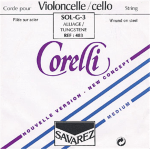
Corelli New Concept strings, which used to be quite hard to come by in the UK, are now becoming a popular choice for students, keen amateurs and professional players. They are steel rope core strings wound with aluminium, nickel or tungsten and are known for their clear sound and response, good balance and long life. They are only available in medium gauge. Savarez also produces a gut core string for cello, but I suggest that beginners steer well clear of these. Gut cores can have a beautiful sound, but are very unstable, need to be tuned by the tuning pegs rather than fine tuners, and have a comparatively short life. They are best suited to players who specialise in baroque and classical music, and whose instruments are set up accordingly.

Players who are less confident about fitting new strings are best off leaving this to their teacher or luthier as the Corelli C string has a reputation for snapping when the metal-wrapped portion comes over the tuning peg. Savarez have recently lengthened the flexible silk-wrapped part of the C string to avoid this from happening, but there are still a few reported mishaps.

Average price for a set in the UK: £96

3.       D’Addario Helicore

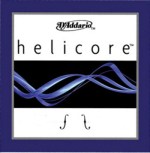
D’Addario describe their Helicore range of strings as follows: “High quality modern strings in stranded steel with titanium & tungsten windings for a warm, clear sound”. Helicore strings certainly do offer a bright sound – potentially a little brash on some instruments. But they are a fine choice for bringing dull-sounding student instruments to life, and for progressing students and amateurs looking for a warmer, more soloistic sound. These strings take very little time to settle in and are well balanced.

Average price for a set in the UK: £96

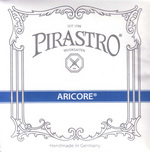
4.       Pirastro Aricore

Aricore strings feature a multifilament synthetic core (perlon) with either silver or aluminium winding. They are long lasting, stable in pitch, and feature a darker, warmer sound than other synthetic core strings. For cellists looking for a brighter tone Aricore strings are also available in chrome-wound A and D strings. The chrome option is also well-suited to musicians who suffer from excessive hand perspiration. These strings are amongst the best and most highly rated synthetic core strings in this price range.

Average price for a set in the UK: £105


Economy Range (£40 – £80 per set)

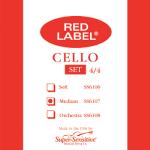
1.       Super Sensitive Red Label

Red Label strings are a popular choice for students and are widely recommended by teachers. These strings feature a full round solid steel core with flat nickel winding. They offer a clean tone, good tuning stability and are durable. Red Label Strings are available in all fractional sizes right down to 1/8 and come in three different gauges: Soft, Medium and Orchestra. Like Jargar strings, these gauges are determined by the diameter of the string: Soft is the smallest diameter while Orchestra is the thickest.

Average price for a set in the UK: £64 (not widely available, but can be ordered from many US retailers for around £30 plus postage)

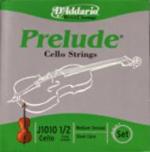
2.       D’Addario Prelude

Another popular choice for students, Preludes are more readily available in the UK. These are solid steel core strings; they are durable and generally unaffected by temperature and humidity changes. They offer a warm tone and the response, although not as precise as that of Jargar or Corelli, is not bad at all. Prelude strings are available in all fractional sizes and come in Low, Medium and Heavy (high) tension. Like Jargar and Red Label, the Medium gauge is the most versatile and therefore the most popular type.

Average price for a set in the UK: £46

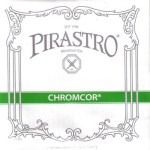
3.       Pirastro Chromcor

Chromcor are solid steel strings designed for students. They are very popular among teachers as they are durable and easy to play. They offer easy response and a neutral tone, making them a well-balanced string choice for beginner and intermediate students who need strings that are not a battle to play with squeaks and scratches, but equally not overly forgiving of poor technique. These strings also benefit from a very quick playing in period. For more discerning players looking for a darker and more complex tone, Chromcor plus are a good option although strictly speaking they belong in the mid-range category for price and playability at roughly £94 per set.

Average price for a set of Chromcor in the UK: £66

This list is far from complete – there are other economy brands which are reasonable strings in terms of sound and durability. As a rule, the cheapest strings on the market are best avoided. Some are of such poor quality that they are barely playable. For a beginner who is already struggling with tone production, a set of strings which sound awful even in the most skilful hands are like a musical death sentence – especially when that beginner is an adult who already has a very clear idea of what he or she wants to sound like.


Did you find this post useful? Please consider making a donation.

© D C Cello Studio 2011
Anti-Slip Devices for Your Cello

Keeping your instrument steady and secure is absolutely essential for relaxed, uninhibited playing. There are a few different options available, and it is important to choose one that is compatible with your seat and the floor type you most frequently find yourself on.

Rubber Tip

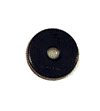
The rubber tip fits on the end of most cello spikes, but tends to slip on most surfaces. However, it does offer protection from sharp spikes when the cello is in transit in a soft case or out of its case between practice sessions.

Average price: £1.50 – £2.50

Black Hole

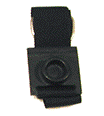
Effective on wooden and laminate floors, especially when moistened with water. Not ideal for all carpeted surfaces. Convenient size – fits into most accessory pockets on cello bags and cases.

Average price: £8 – £11

Rock Stop

Designed to fit around a chair leg so not compatible with x-frame benches. Although it prevents your cello from slipping forward, this type of anchor only attaches to the left chair leg and can lack overall stability on slippery floors as the cello spike can still slip from side to side.

Average price: £12 – £14

Floor Anchor

Traditional anchor designed for four-legged chairs. Not as compact and portable as the Black Hole or Rock Stop, but provides guaranteed stability.

Average price: £14 – £16

Endpin Adapter

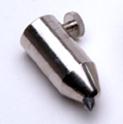
Ultra-sharp hard metal adapter to fit onto the end of your spike. Very effective as a non-slip device, but will leave small marks on wooden or laminate flooring.

Average price: £30 – £35 (not available from UK retailers)

Ball Adpater

Like the endpin adapter above, this device fits onto the end of most spikes. A cheaper alternative to the endpin adapter, and effective on all surfaces. Won’t damage wooden or laminate surfaces.

Average price: £15 – £20


Did you find this post useful? Please consider making a donation.

© D C Cello Studio 2011
Order or download my latest electronica-cello feast, Cellotronics

Which Rosin is Best?

Rosin is applied to the bow hair and is essential for all string players. It comes in the form of a small compact cake, and choosing the right type for you can be confusing and frustrating. It can range in price from £1 – £30, comes in different colours and consistency, and different types exist for different instruments, string brands and types, and even seasons.
My advice is to take much of the debate as to when and where to use specific types of rosin with a generous pinch of salt. There are so many variables that influence the overall effect of rosin in such subtle ways, that in the end it really just comes down to personal preference. I have a few tips worth considering when choosing your rosin. My aim is to eliminate some of the confusion associated with choosing the right product, or the need to visit forum discussions on the subject will only serve to make you more confused.
1) Beginner Students
When you’re in the early stages of learning how to play your instrument, the last thing you’re going to notice is the subtle difference between the grips offered by light or dark; powdery or hard; or metallic or non-metallic rosin. At this stage, all you need is a reliable brand of rosin which serves the essential purpose of keeping your bow hair sticky and allowing it to grip the string. There is no need to be extravagant, and no need to have your head turned by raging debates over which brand offers the best grip for various bow articulations. The only type I would avoid at all costs is the very cheap, nasty rosin that tends to come with very low-budget student instrument outfits and sometimes found on Ebay at around £0.30 per cake. In fact, my advice is to avoid these outfits altogether, but I appreciate that this is not always possible. My recommendation for beginner to intermediate students is the very popular Hidersine brand, which costs a mere £1 – £4 per cake and providing it is not lost or dropped (rosin is brittle and shatters very easily), will last most players for around three years. Also popular in this price range is a brand called AB Rosin.

2) Rosin for Synthetic and Gut Core Strings
More advanced players will experiment with different string types in their quest for the ideal sound. What strings to choose for your instrument is yet another thorny subject covered in my Strings article and also comes down to personal preference for the most part. Metal strings behave differently to gut and synthetic core strings, and require different types of rosin. Because metal strings are more widely used, most rosins are suitable for them. The following brands are recipes devised for synthetic and gut core strings: Melos Baroque Cello rosin (ideally suited to gut core strings) and Dominant Violin, Viola & Cello rosin (developed for use with Dominant synthetic core strings, but well suited to all synthetic core brands). Prices range from around £5 – £10.

3) Hypoallergenic Rosin

For those who are sensitive or have allergies to the dust produced by rosin, fear not! Several makers now offer hypoallergenic rosin made with non-irritating ingredients and allergy-tested. The best known of these brands are Supersensitive Clarity, Larsen Antiallergenic and Geipel Hypoallergenic. It should come as no surprise that these makes are more expensive than most, and are priced at around £8 – £15.

4) Popular Professional Brands
This is where choosing the perfect type seems to become an arcane science: humidity, heat, cold, preferred stickiness light, dark, medium, bleached or unbleached bow hair: the list of influencing factors goes on. By the time you have been playing for several years and have begun to develop your technique in more subtle and detailed ways, you will certainly be able to tell the difference between bad, average and good quality rosins. Getting too hung up on whether your choice of rosin ticks all the right boxes is not the best use of your time and efforts. The truth is, any reliable brand in the £5 – £15 price range will suffice. Try two or three different brands at a time and you’ll soon settle on something you like best. The following brands are firm favourites with advancing students and professional players:
Hill Dark or Light for Violin, Viola and Cello: one of the most widely sold rosins in the world. Average price: £4 – £6.


Gustave Bernardel rosin for Violin, Viola and Cello: this fine rosin has a reputation for leaving less dust than other brands and offering “just the right amount of bite”. Certainly one of my preferred brands.
Average price: £6 – £9

Pirastro Cello & Cellisto: one of the most widely recognised brands for strings. Pirastro offers qood quality rosin suitable for all string types and brands (even if the marketing suggests that the rosin has been specially formulated for        Pirastro strings).
Average price: £6 – £9

Kaplan by D’Addario: another widely recognised brand for strings. Kaplan rosin gets positive reviews for its quality, low dust and very practical one-handed box design, allowing the player to flip open and apply with only one hand.
Average price: £8 – £10

5) Premium Brands
If you’re feeling extravagant there are brands that will set you back as much as £30. Typically these types of rosin will last longer than most and contain ingredients such as gold and silver, hence the inflated price. There is no question that these are quality brands, but the difference will be noticed only by you! Avoid relying too much on the quality of your accessories to give you the perfect sound: 99% of this is down to your technique, not your tools! The following brands can be thought of as the Rolls Royce of rosin:
Andrea Rosin – formerly known as Tartini, this rosin comes in various different types including solo and orchestral. Prices range from £18 – £25

Larica ‘Liebenzeller’ Rosin – generally considered to be the very best rosin money can buy. Larica contains gold and comes in four different hardness levels and costs around £20 – £30 per cake.

Did you find this post useful? Please consider making a donation.

© D C Cello Studio 2011