Strings need no introduction. They are the heartbeat of your instrument and lend their name to its family. But there is a fair amount to know about the different types, the varying costs and what to avoid. Much like rosin there is a rather overwhelming variety of string brands and types along with animated debates over which is the best. And like rosin, finding the right strings for your cello is far from an exact science because there are so many variables outside of the strings themselves.
Beginner cellists do not need to and really shouldn’t spend a fortune on top-of-the-range strings such as Larsen, Belcanto, Evah Pirazzi, Permanent or Passione. In the interests of developing beautiful sound it is best to have a set of strings which offer clean tone and response. The aforementioned strings are designed for players who have already developed a signature sound.
The ideal strings for beginner to intermediate players are generally steel core. There are several varieties of synthetic core strings aimed at this market too. They tend to be less stable in terms of tuning and often don’t last as long as steel strings. Having said this there are a few synthetic brands well worth considering. The following brands are reliable and offer a clean, neutral sound with good response.
Mid-Range (£90 – £120 per set)
1. Jargar
 These strings are made on a flexible steel core. They produce a powerful and well-balanced tone, have a long life and don’t take more than a couple of days to play in. Jargar strings come in three different tensions: Dolce (thinnest diameter, low tension); Medium (middle diameter, medium tension); and Forte (thickest diameter, highest tension).
Typically I recommend Medium strings, which are the most widely available and by far the most versatile. For very new instruments with a harsher tone which has yet to settle down, Dolce strings tend to be a great way to take that unpleasant edge off the sound. Forte strings are a bit overbearing and not ideal for less experienced players. They are also not well suited to much older instruments given the high tension, but this also depends on the set-up. Your luthier will be able to make recommendations based on what he/ she knows about your instrument.
Average price for a set in the UK: £94
2. Savarez Corelli
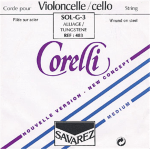 Corelli New Concept strings, which used to be quite hard to come by in the UK, are now becoming a popular choice for students, keen amateurs and professional players. They are steel rope core strings wound with aluminium, nickel or tungsten and are known for their clear sound and response, good balance and long life. They are only available in medium gauge. Savarez also produces a gut core string for cello, but I suggest that beginners steer well clear of these. Gut cores can have a beautiful sound, but are very unstable, need to be tuned by the tuning pegs rather than fine tuners, and have a comparatively short life. They are best suited to players who specialise in baroque and classical music, and whose instruments are set up accordingly.
Players who are less confident about fitting new strings are best off leaving this to their teacher or luthier as the Corelli C string has a reputation for snapping when the metal-wrapped portion comes over the tuning peg. Savarez have recently lengthened the flexible silk-wrapped part of the C string to avoid this from happening, but there are still a few reported mishaps.
Average price for a set in the UK: £96
3. D’Addario Helicore
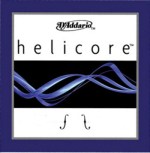 D’Addario describe their Helicore range of strings as follows: “High quality modern strings in stranded steel with titanium & tungsten windings for a warm, clear sound”. Helicore strings certainly do offer a bright sound – potentially a little brash on some instruments. But they are a fine choice for bringing dull-sounding student instruments to life, and for progressing students and amateurs looking for a warmer, more soloistic sound. These strings take very little time to settle in and are well balanced.
Average price for a set in the UK: £96
4. Pirastro Aricore
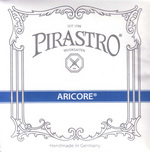 Aricore strings feature a multifilament synthetic core (perlon) with either silver or aluminium winding. They are long lasting, stable in pitch, and feature a darker, warmer sound than other synthetic core strings. For cellists looking for a brighter tone Aricore strings are also available in chrome-wound A and D strings. The chrome option is also well-suited to musicians who suffer from excessive hand perspiration. These strings are amongst the best and most highly rated synthetic core strings in this price range.
Average price for a set in the UK: £105
Economy Range (£40 – £80 per set)
1. Super Sensitive Red Label
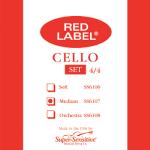 Red Label strings are a popular choice for students and are widely recommended by teachers. These strings feature a full round solid steel core with flat nickel winding. They offer a clean tone, good tuning stability and are durable. Red Label Strings are available in all fractional sizes right down to 1/8 and come in three different gauges: Soft, Medium and Orchestra. Like Jargar strings, these gauges are determined by the diameter of the string: Soft is the smallest diameter while Orchestra is the thickest.
Average price for a set in the UK: £64 (not widely available, but can be ordered from many US retailers for around £30 plus postage)
2. D’Addario Prelude
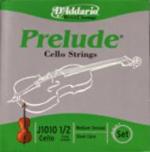 Another popular choice for students, Preludes are more readily available in the UK. These are solid steel core strings; they are durable and generally unaffected by temperature and humidity changes. They offer a warm tone and the response, although not as precise as that of Jargar or Corelli, is not bad at all. Prelude strings are available in all fractional sizes and come in Low, Medium and Heavy (high) tension. Like Jargar and Red Label, the Medium gauge is the most versatile and therefore the most popular type.
Average price for a set in the UK: £46
3. Pirastro Chromcor
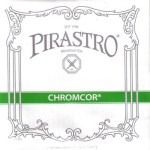 Chromcor are solid steel strings designed for students. They are very popular among teachers as they are durable and easy to play. They offer easy response and a neutral tone, making them a well-balanced string choice for beginner and intermediate students who need strings that are not a battle to play with squeaks and scratches, but equally not overly forgiving of poor technique. These strings also benefit from a very quick playing in period. For more discerning players looking for a darker and more complex tone, Chromcor plus are a good option although strictly speaking they belong in the mid-range category for price and playability at roughly £94 per set.
Average price for a set of Chromcor in the UK: £66
This list is far from complete – there are other economy brands which are reasonable strings in terms of sound and durability. As a rule, the cheapest strings on the market are best avoided. Some are of such poor quality that they are barely playable. For a beginner who is already struggling with tone production, a set of strings which sound awful even in the most skilful hands are like a musical death sentence – especially when that beginner is an adult who already has a very clear idea of what he or she wants to sound like.
Did you find this post useful? Please consider making a donation.
© D C Cello Studio 2011






 The Cello Companion